

The main hormone changes affecting skin aging during the three phases of menopause are the dramatic decline in **estrogen** levels. It’s important to recognize that menopausal skin is not merely “older skin”; it is biologically and functionally distinct.
The age at which menopause begins is influenced by a variety of factors, including genetics, environmental elements like UV radiation and tobacco smoke, and lifestyle choices such as hormone levels, nutrition, alcohol consumption, stress, and sleep deprivation.
Perimenopausal symptomatology is variable in different women. Generally, within 4–5 years of menopause, 80% of women will be devoid of symptoms or have only mild symptoms, while 20% may have symptoms for up to 10 years or longer.1
Perimenopause, or “menopause transition.
Perimenopause can begin eight to 10 years before menopause, when your ovaries gradually produce less and less estrogen. It usually starts when you’re in your 40s. Most females begin to experience symptoms in their mid-to-late forties.
The most prevalent climacteric symptoms, experienced by approximately 75% of women, are vasomotor symptoms (VMS). These include hot flashes, night sweats, and sleep disturbances, which may begin during perimenopause. Often, VMS prompts women to seek advice from a physician.2
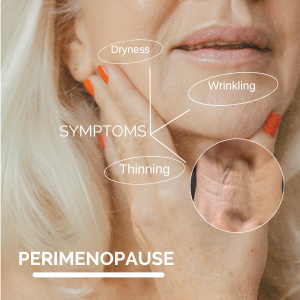
It’s important to pay closer attention to your daily skincare routine at this stage of life. Take a moment to review the products you are currently using to ensure they are still meeting your skin’s needs.
As estrogen levels naturally decrease, your skin’s ability to retain moisture can be affected. This may lead to increased dryness, more noticeable wrinkles, thinning skin, and even some itchiness.+
There are three major forms of estrogen:
Estrone (E1) is the primary form of estrogen that your body makes after menopause.
Estradiol (E2) is the primary form of estrogen in your body during your reproductive years. It’s the most potent form of estrogen.
Estriol (E3) is the primary form of estrogen during pregnancy.
Skin Concerns
Contact dermatitis and asteotic eczema, are the most commonly reported dermatoses in perimenopausal. Due to an increase in TEWL (Transepidermal water loss). The term “TWEL” refers to the quantity of water that naturally evaporates from the skin into the surrounding environment. This process is driven by the difference in water vapor pressure on either side of the skin’s protective barrier.
Seek out facial products featuring ingredients that specifically address the symptoms of perimenopause in the skin. These ingredients should also aid in the cell renewal process while helping to preserve the skin’s natural moisture barrier.
A skincare routine aimed at mitigating the negative impacts of perimenopause on the skin consists of several key steps.
Step one Cleanse
Opt for a gentle cleanser. It’s essential to select a cleanser that preserves your skin’s natural moisture barrier without stripping away vital hydration. The ideal cleanser should effectively eliminate surface impurities while ensuring your skin feels comfortable and not dry or tight.
Here are my suggestions:
Rhonda Allison Soothing Gel Cleanse
Rhonda Allison Soothing Cream Cleanse
Skin Script Pomegranate Antioxidant Cleanser
Skin Script Green Tea Citrus Cleanser
Step Two Apply a Toner
A toner acts as a vital link between cleansing and moisturizing. It is essential for balancing the skin’s pH and enhancing the absorption of subsequent products. When selecting a toner, opt for a hydrating formula enriched with antioxidants to restore the skin’s moisture barrier.
Step Three – Serum Application
The “Serum Step” enables you to customize your skincare routine to target specific symptoms of estrogen deficiency, such as dryness, itchiness, wrinkles, or thinning skin.
Understanding Serums in Skincare
A serum consists of potent skincare ingredients designed to elicit a beneficial reaction from the skin. Consider serums as specialized treatments that target specific skin issues, complementing your routine of cleansing, toning, and moisturizing.
You apply serums to:
- increase skin hydration for moist youthful looking skin
- support collagen and elasticity production to reduce lines and wrinkles
- maintain cellular turn-over for smooth skin
- relieve itchy dry skin
Step Four Apply Moisturizer
Moisturizers help to keep the skin hydrated by preventing transepidermal water loss (TWEL). In addition, moisturizing daily will help to offset menopause skin conditions initiated by the reduction of estrogen levels.
Use a lightweight emollient with peptides and antioxidants. One with both humectant and occlusive ingredients. For example, hyaluronic acid, glycerin, fatty acids, squalane, and urea.
Final Daytime Step – Apply Sun Protection
Use sun protection
Sunscreens are formulations made up of a range of ingredients aimed at safeguarding the skin by absorbing, blocking, or scattering ultraviolet (UV) radiation.
Opt for a broad-spectrum sunscreen with an SPF of 30 or higher and make sure to apply it consistently, no matter the weather conditions.
Enhance your skincare routine with the complete Rhonda Allison collection, available now in our Marketplace store https://ramarketplace.com/store/ayoungeryouskincare
References
- , 2. Zouboulis CC, Blume-Peytavi U, Kosmadaki M, Roó E, Vexiau-Robert D, Kerob D, Goldstein SR. Skin, hair and beyond: the impact of menopause. Climacteric. 2022 Oct;25(5):434-442. doi: 10.1080/13697137.2022.2050206. Epub 2022 Apr 4. PMID: 35377827. ↩︎
 Skin Care Tips and News
Leave a comment